Bread, as a common food in daily life, has the advantages of portability, delicious taste, and rich variety, and is deeply loved by the public. But there may also be hidden health hazards. While enjoying its deliciousness, the issue of bread food safety cannot be ignored. Let’s take a look together:
1. Bread standard
According to GB 7099-2015 “National Food Safety Standard for Pastry and Bread”, bread refers to food made mainly from wheat flour, yeast, water, etc., with or without the addition of other ingredients, through processes such as stirring, fermentation, shaping, awakening, and ripening.

2. Bread classification
According to GB/T 20981-2021 “General Principles for Bread Quality”, bread can be classified into the following categories:
① Soft bread: bread with soft tissue and evenly distributed pores.

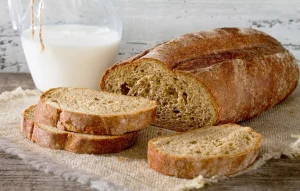
② Hard bread: bread with a hard or cracked surface and soft internal tissue.
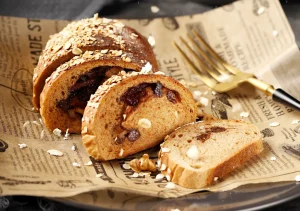
③ Crispy bread: a bread with clear layers and a soft texture.

④ Conditioned bread: bread with added ingredients such as butter, edible oils, egg products, meat products, cocoa products, jam, etc. on the outside or inside of the bread before or after baking.

⑤ Dried bread products: Bread products made by slicing or slicing bread, baking or frying it, with or without other ingredients, and with a crispy or crunchy texture.
3.How to choose bread correctly
①Check the label and choose the packaging
When consumers purchase pre packaged bread, they must carefully check whether the production information of the bread is complete, such as production date, shelf life, manufacturer address, phone number, ingredient list, nutritional content list, etc., to ensure that they are clear and visible. Do not purchase bread with loose or damaged packaging, as it loses moisture quickly, becomes hard in taste, and is easily contaminated by bacteria, leading to spoilage.
When choosing bulk bread from a bakery, be sure to carefully observe the hygiene conditions inside the store and inquire about the production date of the bulk bread. It is best to eat and buy it now, and consume it as soon as possible.
②Refer to the ingredient list and nutrient composition table
When consumers choose bread, in addition to paying attention to quality and safety, nutrition is also important, and they should also pay attention to several core nutritional indicators such as fat, sugar, and sodium in food labels. When checking the ingredient list for product fat information, it is important to avoid eating bread containing “trans fatty acids” that are very harmful to cardiovascular health. Generally, bread has a high sugar content, so you can choose bread with sugar at the back of the ingredient list or bread with xylitol instead of white sugar.
In addition to looking at the fat and sugar content, it is also important to pay attention to the sodium content. As salt is an essential ingredient in bread making, bread is a high sodium food. It is recommended that consumers choose bread with low sodium content as much as possible to avoid excessive daily intake of sodium.
In addition, consumers often prefer to purchase whole wheat bread when choosing bread. If “whole wheat flour” is listed at the bottom of the ingredient list, it is difficult to play the role of “whole wheat”. Therefore, it is necessary to choose whole wheat bread with whole wheat flour listed first.
③See the appearance
It is recommended to choose bread with a neat appearance, uniform color, and golden outer skin. If there are bubbles on the crust of the bread, it is likely due to insufficient fermentation time. This type of bread usually has a dry and hard texture and is not soft enough. Consumers should be cautious when purchasing.
4. Common safety hazards in bread
①Mold is an indicative indicator for evaluating food quality and safety.
If the mold in food exceeds the standard severely, it will destroy the nutritional content of the food, make the food lose its edible value, and may also produce mycotoxin. According to the National Food Safety Standard for Pastry and Bread (GB 7099-2015), the maximum limit of mold in bread is 150 CFU/g.
The reason for excessive mold in bread may be due to contamination of raw materials or packaging materials by mold, inadequate hygiene control during production and processing, or improper storage and transportation conditions of the product.
②Acid value mainly reflects the degree of rancidity of fats and oils in food.
According to the National Food Safety Standard for Pastry and Bread (GB7099-2015), the acid value (calculated as fat) content in bread should be less than or equal to 5mg/g.
The main reasons for the unqualified acid value may be the lax control of raw material procurement by enterprises, substandard production processes, improper storage conditions of products, especially when the storage temperature is high, which can easily lead to the oxidation and rancidity of fats in food. The long-term intake of aldehydes and ketones produced by the rancidity of fats and oils can have a certain impact on health.
If you have any related food test kit needs, please feel free to contact us!