

Israel issues two orders to simplify food import requirements
On October 26, 2023, the Israeli Ministry of Health issued an order for imported food (No. 522203523) and a notice of non-compliance with certain food labeling instructions, as follows:
(1) Mineral water imported from August 8th to December 25th and sold in EU countries can be imported into Israel in its original packaging;
(2) These imported mineral water should have English labels;
(3) These imported mineral water comply with all legal requirements and regulations (except for Hebrew labeling);
(4) Red food label stickers are not mandatory.
Smooth Closing | 2023 All Asia Cold Chain Exhibition Ends Without Ending, Looking Forward to Gathering Again
On October 27th, the 2023 All Asia Cold Chain Exhibition successfully concluded at the Shanghai New International Expo Center! This year’s All Asia Cold Chain Exhibition and the 2023 Asia International Logistics Technology and Transportation Systems Exhibition (CeMAT ASIA) have joined hands and attracted over 800 exhibitors, covering various fields such as cold chain logistics, system integration, machine vision and industrial control, conveyor sorting systems, mobile robots, forklifts and accessories, and industrial grade unmanned driving. During the same period, more than 40 diverse activities and forums were held, with abundant content.
Industry exhibitors gather buyers to go to Shanghai together
Multi exhibition linkage and overlapping influence, the 2023 All Asia Cold Chain Exhibition focuses on “warehousing, transportation and distribution, driving the entire cold chain industry” as the theme, bringing together well-known domestic enterprises represented by SAIC MAXUS, China Insurance Logistics, Hangcha, Zhongyang Liku, Xina Hao, Prog, Logistics Source, etc., presenting the latest products and solutions, and sharing with the audience new products, new technology solutions, and development trends in the industry.
A large number of professional visitors came to the four-day exhibition. A group of high-quality buyers, including Maersk, Zhongtong, Wal Mart, Yihai Kerry, Weiquan Food, Micun, Zhongxue, Guangtong Airlines, CIMC, gathered at the exhibition site to meet and negotiate with potential brands under the arrangement of the sponsor, and jointly seek cooperation opportunities.
During the same period of the exhibition, more than 40 forum activities were held, with over a hundred guests engaging in ideological exchanges. Focusing on topics such as the development trend of logistics both domestically and internationally, the current status of high-end manufacturing equipment development, the transformation of industry, academia and research achievements, supply chain, digital logistics technology, logistics intelligence, digitization, artificial intelligence, supply chain, green and low-carbon, and warehouse transformation and upgrading, the exhibition directly addressed industry hotspots, deeply empowered the industry, and enabled enterprises to participate in the exhibition At the same time as observing the exhibition, there are more professional gains.
Cold chain industry professional show gathers momentum and empowers industry development
In recent years, multiple policies related to cold chain logistics have been released at the national level, and policy support has been continuously increasing; Secondly, with the rapid development of emerging industries such as fresh e-commerce and cold food, the cold chain logistics market has also experienced explosive growth. In response to market demand and technological progress, the 2023 Shanghai All Asia Cold Chain Exhibition emerged. As a professional exhibition in the cold chain industry, this exhibition fully leverages the platform functions of the exhibition, actively promotes high-quality development of the industry, and helps enterprises achieve intelligent, automated, digital and other development in the cold chain logistics field.
Through an exhibition, reveal the current and future development trends of the industry – the successful convening of the exhibition reveals the current situation of hot demand and significant development potential in China’s cold chain logistics industry, but also reflects that China still faces many challenges in this regard. Therefore, under the “14th Five Year Plan” for the development of cold chain logistics and the “dual carbon” goal, how to reduce costs and increase efficiency, and how to develop intelligent and low-carbon cold chain logistics have become the biggest focus of this exhibition.
Live synchronization also included live browsing activities. For those who did not follow in real-time, they can follow the video account platform of Logistics Cold Chain New Vision to watch live playback.
The exhibition concludes successfully and looks forward to the next gathering
Although the exhibition has come to an end, it will not stop in the future. The All Asia Cold Chain Exhibition will continue to forge ahead and look forward to traveling with you again next year to seek common development!
South Korea Recalls Fried Peanut Products with Excessive Aflatoxin Levels
On October 31st, the South Korean Ministry of Food and Drug Safety (MFDS) announced that a food company in South Korea had detected excessive levels of aflatoxin in its packaged and sold domestically produced fried peanuts, and ordered it to stop selling and recall related products.
Aflatoxin 31.9 was detected in this product μg/kg (B1: 29.1 μg/kg), in South Korea, the limit for aflatoxin in this type of product is Below 15.0 μg/kg (however, B1 is at below 10.0 μg/kg).
Recall target: products with a consumption deadline marked as September 21, 2024.
Vietnam’s Coconut Industry Strives to Export Billions of US dollars
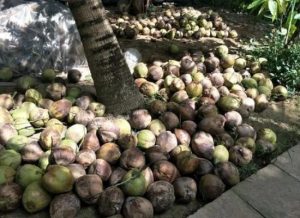
Vice Secretary General of the Vietnamese Coconut Association, Gao Bodenko, revealed that the national coconut planting area is 200000 hectares, which is the source of income for 390000 farmers.
During its first term of 13 years, the association provided timely advice to relevant ministries on policies and directions related to the development of the Vietnamese coconut industry, integrating the coconut industry with industries such as food, handicrafts, planting, and post harvest technology, aiming to enhance the value of coconut trees and the competitiveness of coconut products. The Vietnamese Coconut Association collaborates with the public and businesses to enhance the development and production capacity of coconut products, affirming the brand and reputation of Vietnamese coconut products in both domestic and international markets, thereby increasing the export volume of the Vietnamese coconut industry.
In 2022, the export value of coconut products reached 940 million US dollars. At the beginning of 2023, due to economic difficulties, the export value of the coconut industry decreased. Since the second quarter of 2023, Vietnamese coconuts have been exported to the United States and some European countries through regular trade. China is considering importing fresh coconuts from Vietnam to open up great opportunities for increasing coconut exports.
At present, there are 90 coconut related enterprises in China; Among them, there are 42 coconut product production enterprises. In addition to Pentre Province, provinces such as Long’an, Xining, Qinghe, Pingshun, and Pingding have formed hundreds of hectares of coconut farms.
The new Executive Committee of the Vietnamese Coconut Association, consisting of 14 members, was elected at this conference (with a term from 2023 to 2028).
The Chairman of the Vietnamese Coconut Association, Nguyen Thi Kin ching, emphasized that the biggest goal of the association is to develop the coconut industry into a cutting-edge production and export industry, maximize the economic benefits of coconut products, build a qualified coconut raw material area, and work side by side with farmers in cultivation, harvesting, and processing to ensure stable coconut prices. At the same time, we will help coconut enterprises improve their competitiveness, expand their market, and affirm their brand in both domestic and international markets.
Vietnam Building “Qinghua Rice” Brand and Moving towards Export Market
Ruan Weiqiang, Deputy Manager of Xinfuxing High tech Food Co., Ltd. located in Shaohua Town, Qinghua Province, revealed that all rice planting areas are produced in accordance with Vietnam’s Good Agricultural Practices (VietGAP) and modern agricultural technology. At present, the company has established three rice brands, namely Xin’an Rice, Xinping Rice, and Japonica, and reached the four star “One Township, One Product” (OCOP) standard in 2021.
Successfully building a rice brand has helped enterprises increase market share. In addition to opening 200 rice distribution stores inside and outside the province, the company also exports japonica rice products to the Japanese market through rice export enterprises in various provinces in the northern region, with an average annual export volume of 10-15 tons.
With this achievement, the company is striving to become a direct exporter of japonica rice products to the Japanese market as soon as possible. At present, the company is urgently improving relevant procedures to submit for approval by the Ministry of Industry and Trade. If approved by the Ministry of Industry and Trade, it will bring opportunities for Qinghua Rice to enter the international market.
In addition to Xinfuxing High tech Food Co., Ltd., there are also 6 other enterprises in the province participating in rice production and processing activities. Many companies have successfully built their brands. By strengthening the integration of production and sales, enterprises can control the production, processing, and sales processes, aiming to produce high-quality products and meet market demand.
According to the Plant Protection and Planting Branch of Qinghua Province, the current rice planting area in Qinghua Province is about 230000 hectares, with an average annual yield of 1.5 million tons. In order to enhance the value and economic benefits of rice products in the province and enter the export market, the agricultural department, local governments, and enterprises in the province have been focusing on implementing multiple synchronous solutions to enhance the value of rice products; Among them, emphasis is placed on proposing solutions for building rice product brands.
The Department of Agriculture and Rural Development of Qinghua Province has encouraged and guided various regions to choose high-yield and high-quality rice varieties that many international markets choose to import, such as ST24, ST25, J02, and other varieties targeted at the Japanese market; Q5, BC, TBR1 and other varieties targeted at the Chinese market. At the same time, advanced technology is applied to build rice planting areas that meet the VietGAP standard, and an international planting area code is established to participate in export activities.
In addition, Qinghua Province encourages local governments, enterprises, and cooperatives to actively carry out various rice product promotion activities through websites and news media; Actively participate in various trade promotion conferences held at home and abroad.

Announcement No. 153 of 2023 of the General Administration of Customs on the Inspection and Quarantine Requirements for the Dry Export of Uzbekistan’s Elaeagnus angustifolia to China
According to the laws and regulations of our country, as well as the provisions of the General Administration of Customs of the People’s Republic of China and the Ministry of Agriculture of the Republic of Uzbekistan regarding the inspection and quarantine requirements for the dry export of Uzbekistan’s sand dates to China, from now on, Uzbekistan’s sand dates that meet the following requirements are allowed to be imported:
1、 Inspection and quarantine basis
(1) The Food Safety Law of the People’s Republic of China and its implementation regulations, the Entry and Exit Animal and Plant Quarantine Law of the People’s Republic of China and its implementation regulations, the Import and Export Commodity Inspection Law of the People’s Republic of China and its implementation regulations.
(2) Measures for the Administration of Import and Export Food Safety of the People’s Republic of China.
(3) Protocol between the General Administration of Customs of the People’s Republic of China and the Ministry of Agriculture of the Republic of Uzbekistan on the Inspection and Quarantine Requirements for the Dry Export of Uzbekistan Elaeagnus angustifolia to China.
2、 Allow imported products
The allowed import of dried Uzbekistan dates refers to dried fruits made from Elaeagnus angustifolia grown in Uzbekistan and harvested, washed, dried, or processed through other processes for human consumption.
3、 Food safety requirements
Uzbekistan’s export of dried Chinese dates should comply with Chinese food safety laws and regulations as well as national food safety standards.
4、 Plant quarantine requirements
(1) The raw materials for Uzbekistan’s export of dried Chinese dates should come from orchards (planting enterprises) that have been confirmed by the Plant Protection and Quarantine Bureau (hereinafter referred to as APPQ) under the Ministry of Agriculture of Uzbekistan to meet relevant plant quarantine and food safety requirements and have been registered.
(2) Uzbekistan shall not carry any of the following quarantine pests in dried sand dates imported to China: the Mediterranean pink borer Ephesia kuehnela Zeller, the arched scorpion mite Chortoglyphus arcuatus (Troupeau), the bark beetle Trogoderma granarium, the bark beetle Trogoderma variobile Ballion, and the Aspergillus flavus.
(3) Uzbekistan’s dried Chinese dates must not contain live insects or intentionally added or mixed impurities.
5、 Production enterprise requirements
The production and processing enterprises of Uzbekistan’s dried sand dates have the responsibility to ensure that their exports to China comply with relevant laws and regulations on food safety and plant quarantine in China, as well as Chinese national food safety standards. The production, processing, and storage units of dried Chinese dates exported to China are recommended by APPQ and registered with the General Administration of Customs of the People’s Republic of China.
6、 Processing requirements
(1) Uzbekistan should use drying machines such as ovens or dryers for dehydration processing of dried Chinese dates, and moldy particles should be removed during the processing.
(2) The entire process of planting, production, processing, storage, transportation, and export of raw materials for dried Chinese date from Uzbekistan should comply with the relevant safety and health requirements of China and Uzbekistan, to prevent contamination by pathogenic microorganisms or toxic and harmful substances.
7、 Packaging and labeling requirements
Uzbekistan should use clean, hygienic, breathable, new materials that meet the requirements of food safety and plant quarantine to package dried Chinese dates, and prevent leakage during transportation. Each packaging should be labeled with “This product is shipped to the People’s Republic of China”, as well as English traceable information such as the product name, place of origin, production and processing enterprise name and its registration number in China, exporter name and address. The above information can be pasted on the packaging in the form of a label.
8、 Transportation requirements
Before the shipment of dried dates from Uzbekistan to China, the means of transportation should be inspected and comply with hygiene and epidemic prevention requirements. Quarantine pests or other restricted quarantine substances, such as weed seeds, live insects, plant residues, soil, and other foreign impurities, should not be mixed in.
9、 Certificate requirements
The Uzbek authorities shall issue a phytosanitary certificate for dried Chinese dates that have been inspected and quarantined and meet the requirements of the protocol. The certificate should indicate the name of the production and processing enterprise for dried dates The registration number in China and the certificate of plant quarantine prove that the dried sand dates comply with the provisions of the protocol on the inspection and quarantine requirements for Uzbekistan’s dried sand dates exported to China signed by both China and Ukraine. This batch of goods does not contain the Mediterranean pink borer Ephesian kuehnella Zeller or the arched slag mite Chortoglyphus arcuatus (Troupea) Quarantine pests of concern to China, such as Trogoderma granarium, Trogoderma variobile Ballion, Aspergillus flavus, etc.
10、 Other
Uzbekistan’s export of dried Chinese dates should come from enterprises registered with the General Administration of Customs of the People’s Republic of China. The list of Uzbekistan’s registered enterprises exporting dried sand dates to China can be found on the website of the General Administration of Customs.
Hereby announced.
General Administration of Customs
October 31, 2023